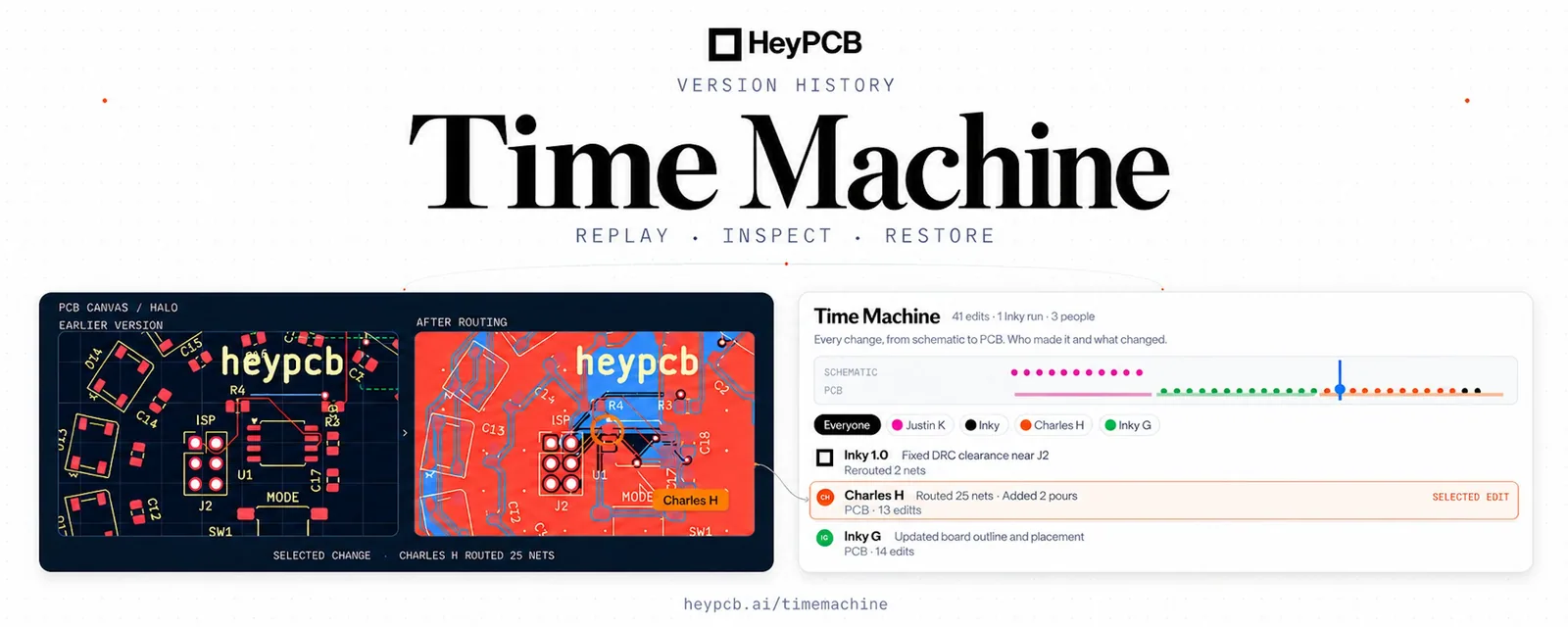
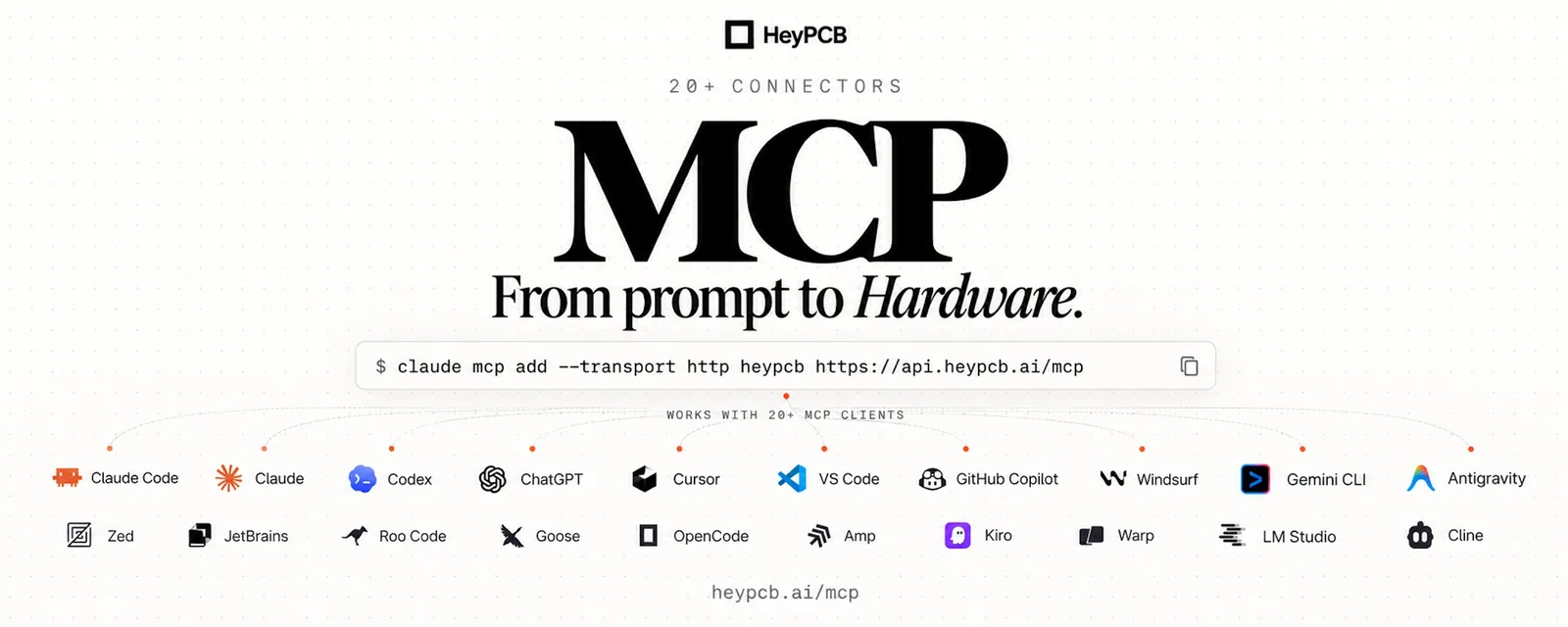
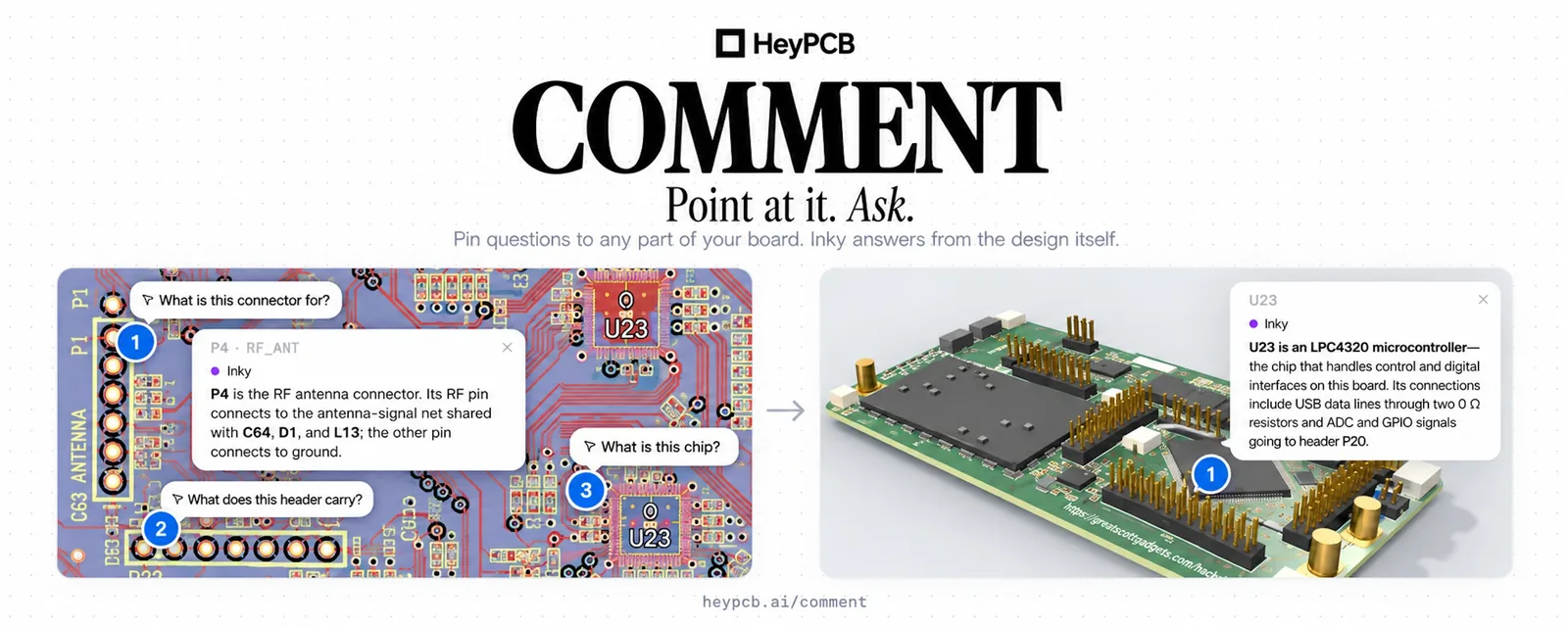
BlogHeyPCB materials
PCB Design Without Material Limits
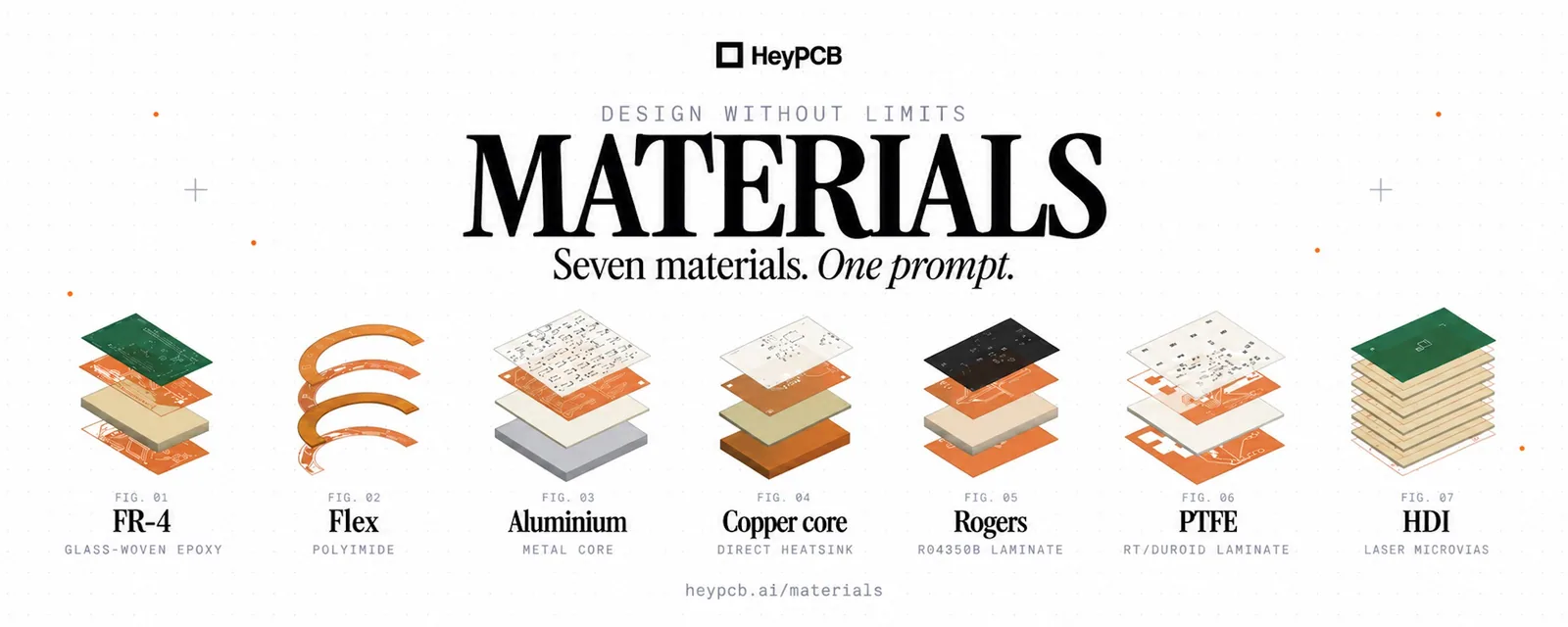
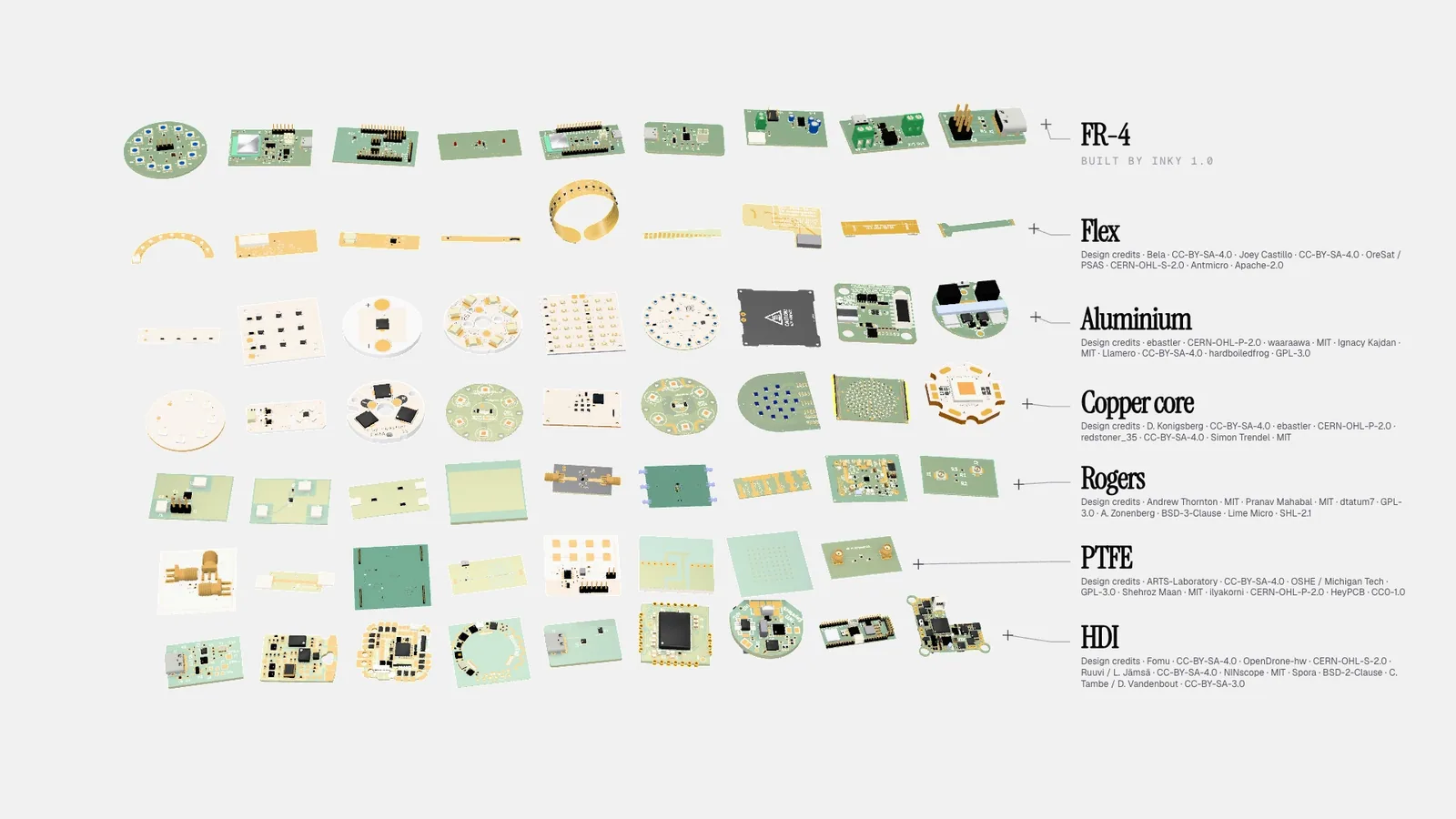
HeyPCB's Inky designs from a material prompt, with boards on FR-4, polyimide, aluminum, copper core, Rogers, PTFE, and HDI.
PCB materials affect everything from thermal performance and signal integrity to mechanical flexibility.
Now Inky can design around those requirements from the start.
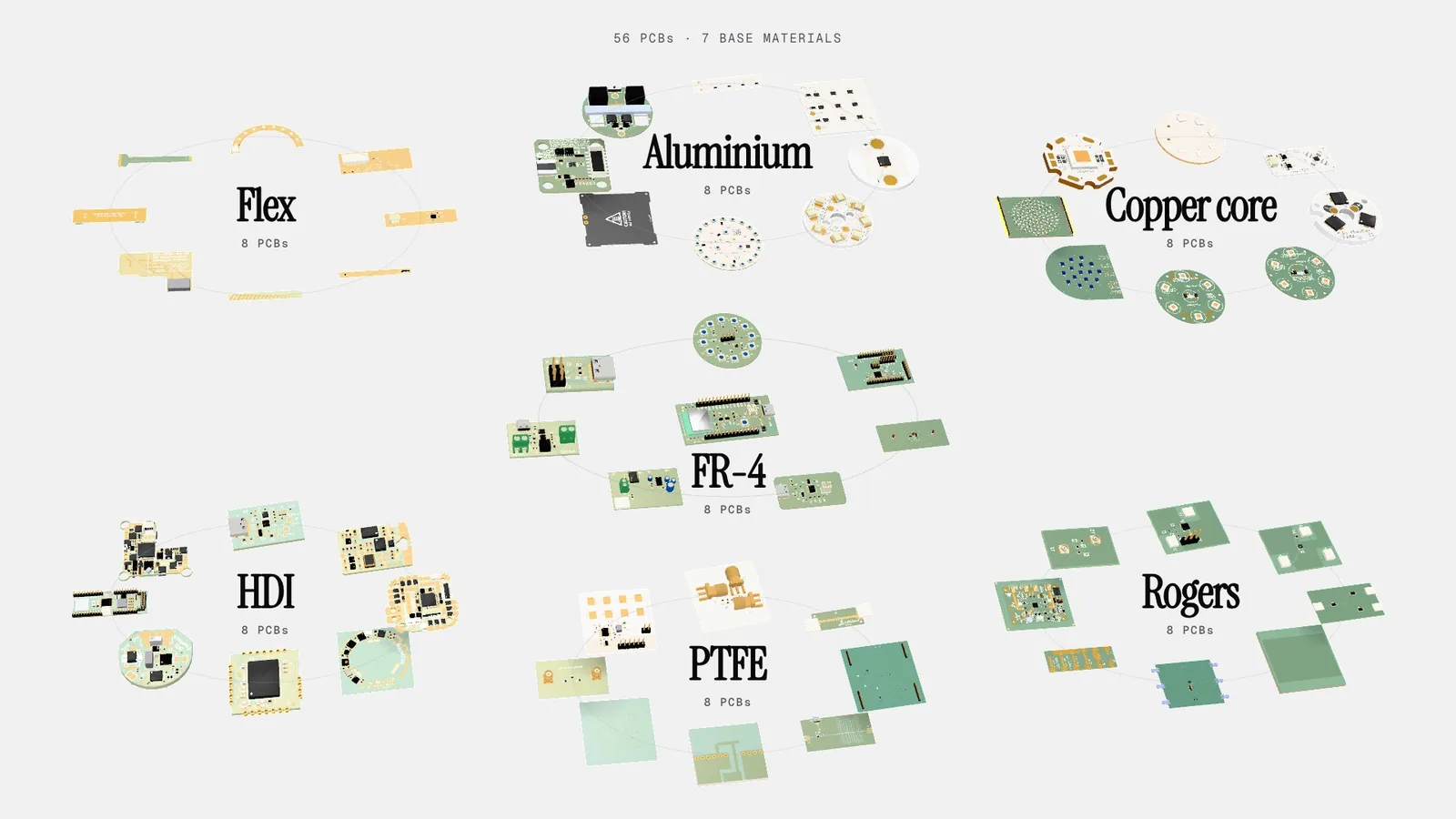
Today, we're introducing Materials in HeyPCB. Specify the material in your prompt, and Inky handles the schematic, component placement, routing, and board stackup.
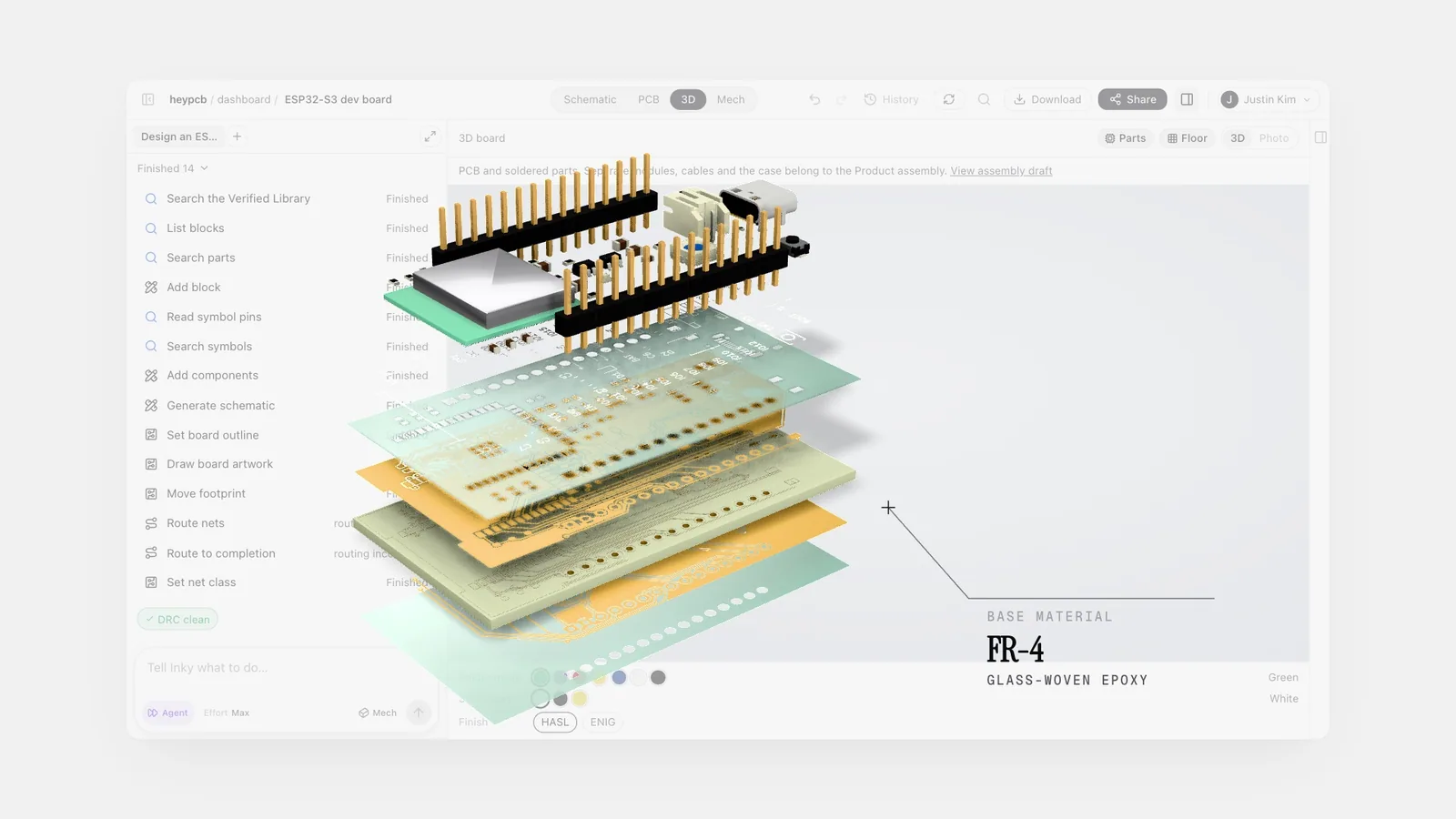
FR-4 remains the standard for rigid PCBs. We used Inky to design an ESP32-S3 development board with USB-C, LiPo charging, and pin headers.
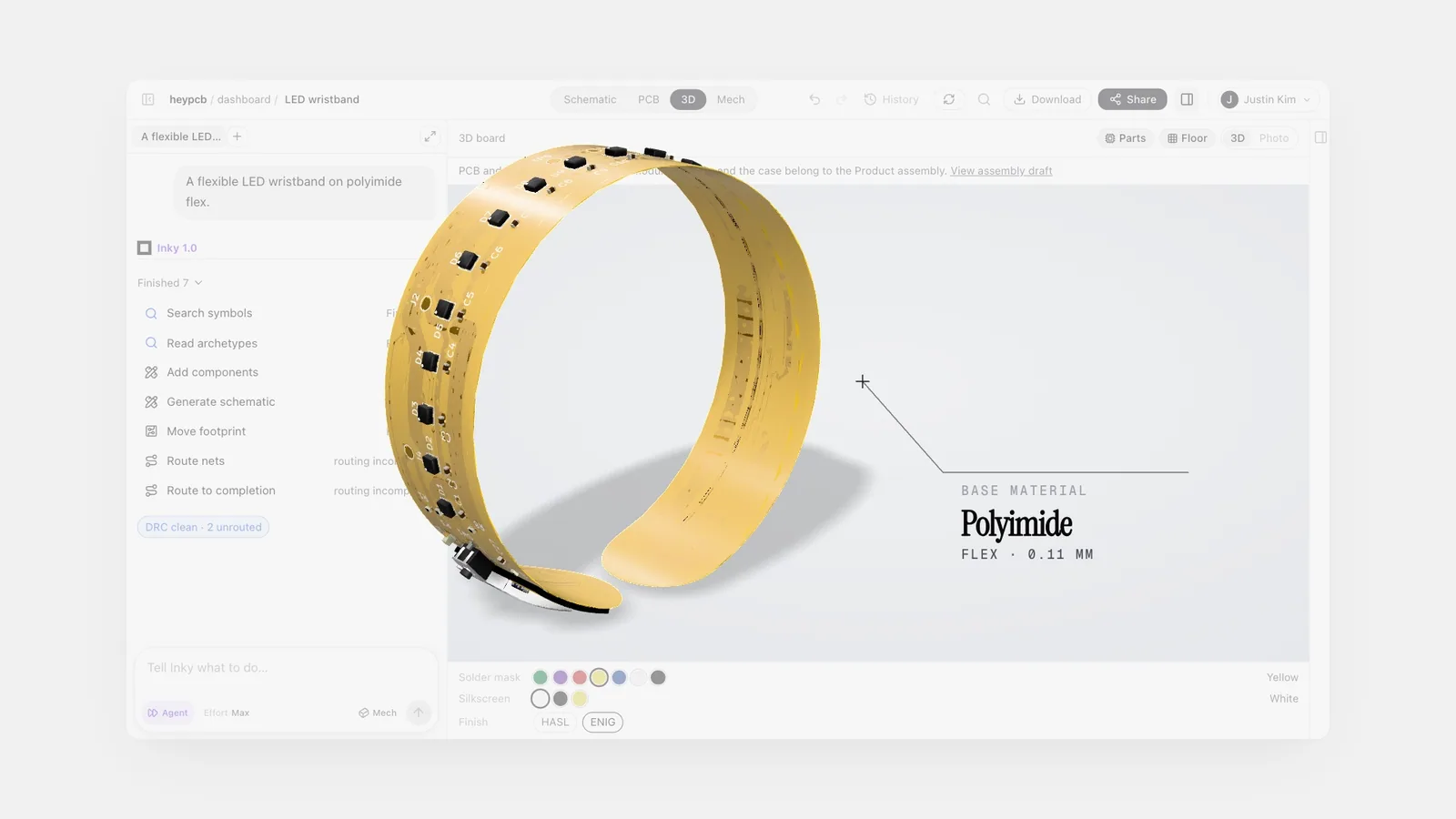
For flexible electronics, Inky designed a polyimide LED arc with nine addressable RGB LEDs, routed along a curved board profile.
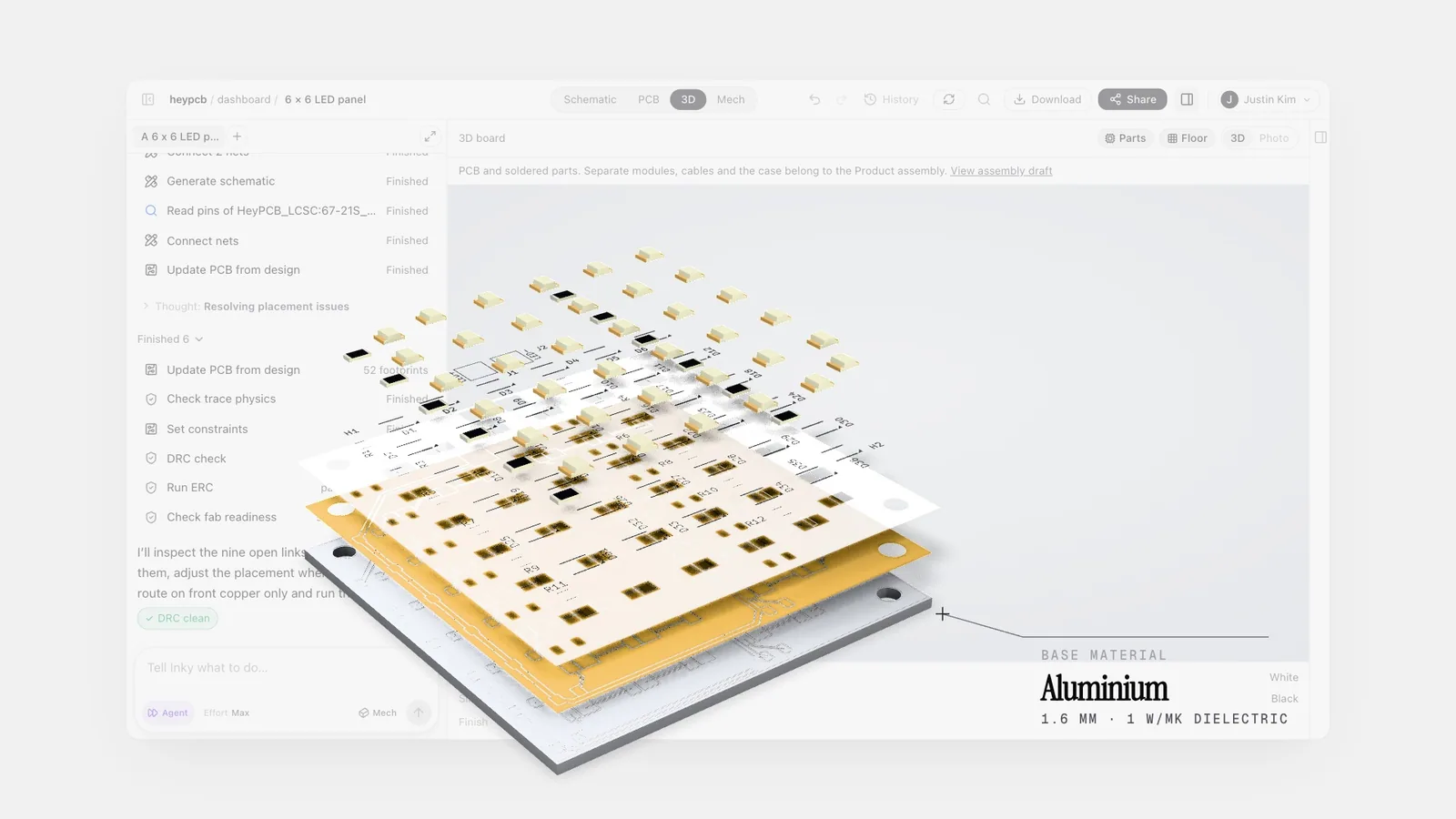
For high-power lighting, Inky designed a 6 × 6 LED panel on aluminum, using the metal base to help dissipate heat.
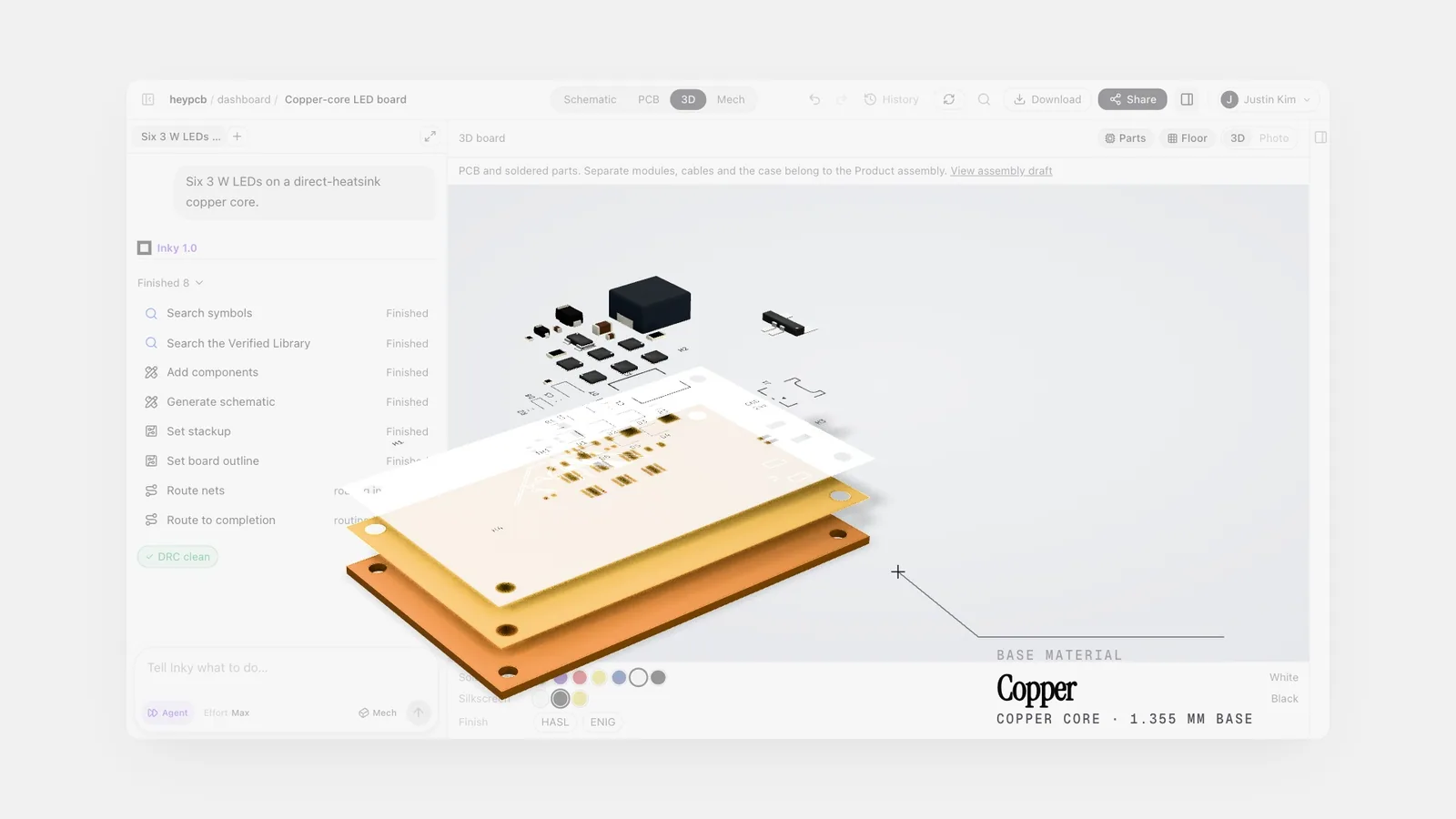
Copper-core boards take thermal management further, providing a direct heat path from the LEDs' thermal pads into the copper base.
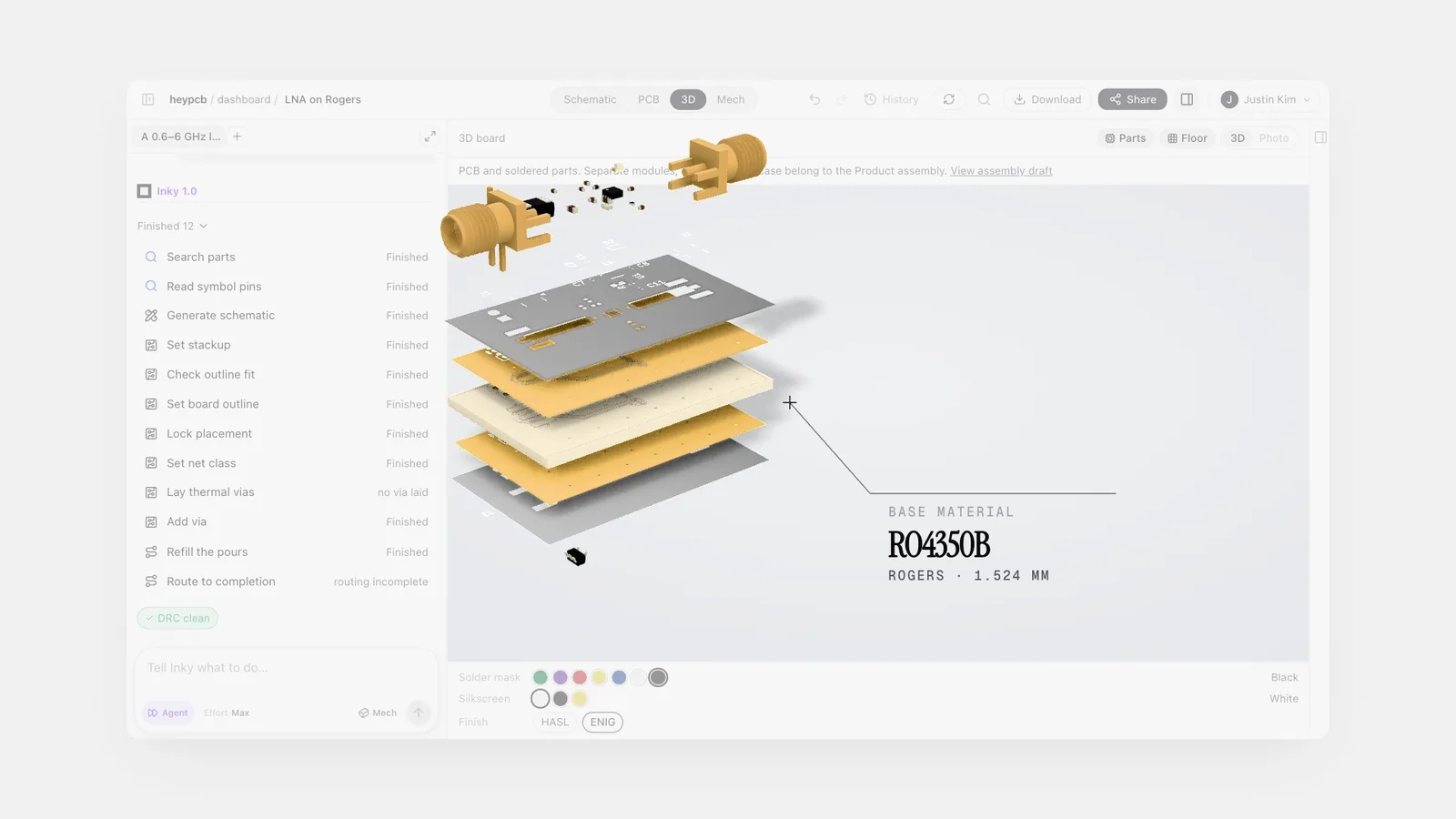
For RF applications, Inky designed a low-noise amplifier on Rogers RO4350B, with 50 Ω transmission lines and ground stitching vias.
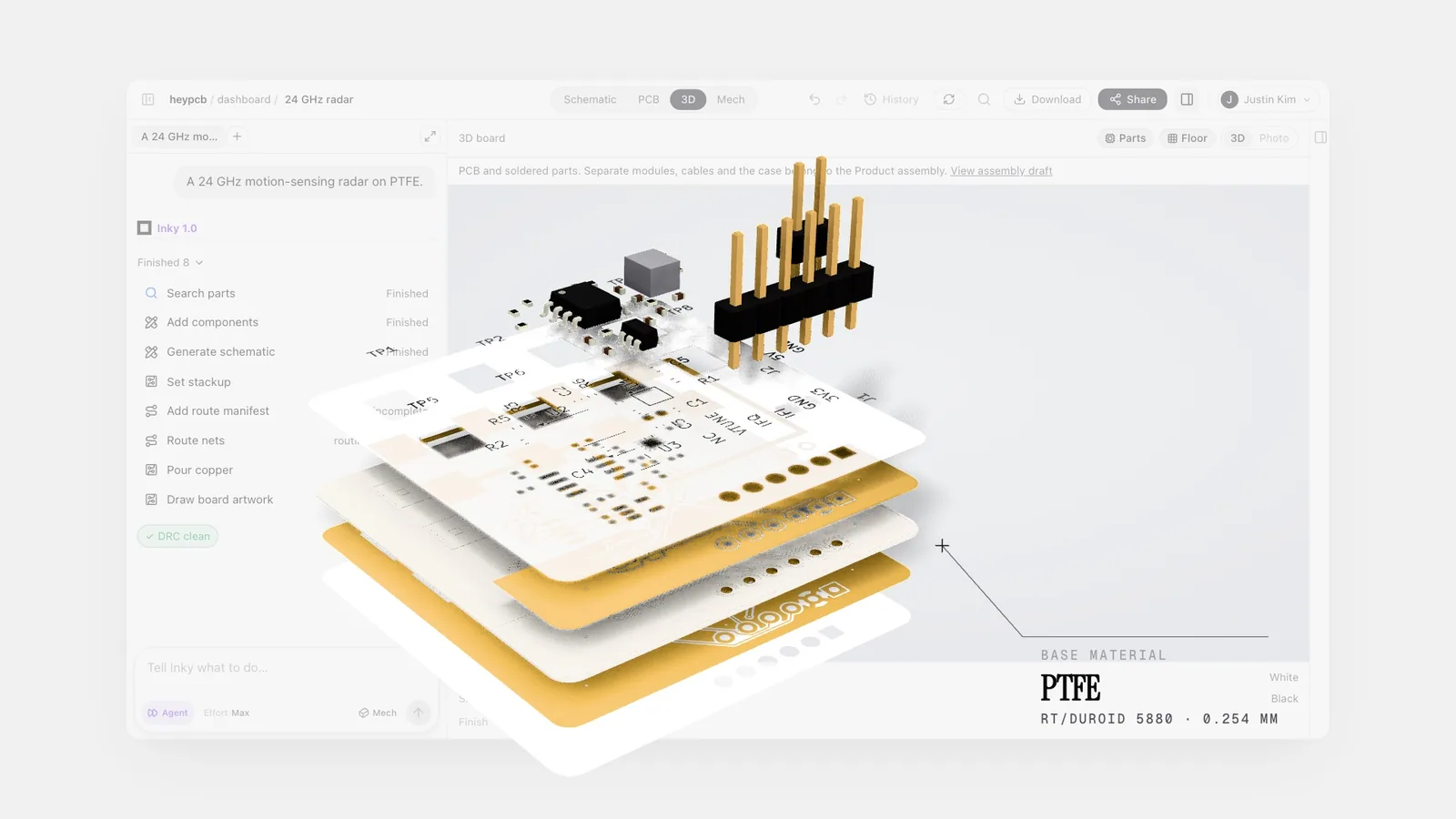
On PTFE, Inky designed a 24 GHz motion-sensing radar with transmit and receive antennas integrated directly into the PCB.
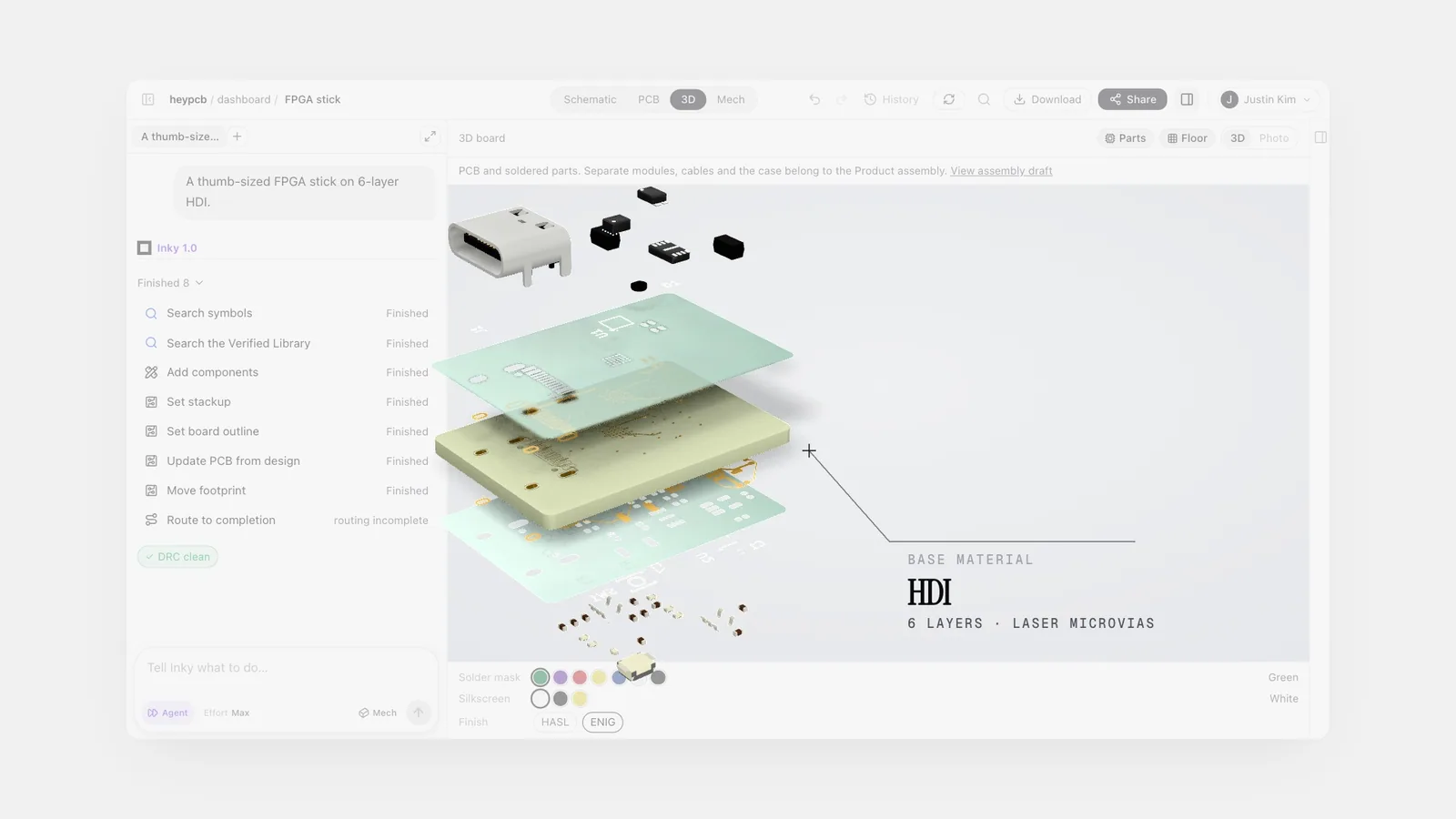
And for high-density electronics, Inky designed a six-layer HDI FPGA board using laser microvias for fine-pitch routing.
Every Inky-built example was verified against its actual PCB design files, with zero DRC errors and zero unconnected nets. The designs are fully editable and exportable for manufacturing.
The best hardware doesn't begin with FR-4, aluminum, polyimide, or any particular material. It begins with an idea.
We believe the material should serve the idea, not limit it.
With Inky, you can design for what your idea actually needs. And with Circuit World, what you create can become the starting point for someone else to explore, learn from, and build upon.
The possibilities of hardware shouldn't be limited by the materials or tools we use to build it.
heypcb.ai/materials 11,000+ open-source PCBs: heypcb.ai/world